New to the Sport?
A Guide to Trials
Everything you need to know to go from curious to your first trial: how it works, how it's scored, what bike and kit you need, and what happens on the day.
Start Reading
01 What Is Trials
The sport in a nutshell.
02 Scoring
How the marks work.
03 Bikes & Kit
What you need to ride.
04 Your First Trial
What happens on the day.
The Basics
What Is Trials?
Motorcycle trials is about control, not speed. Riders take on a series of marked-out obstacle courses called sections: rocky streams, steep banks, tree roots, mud and boulders. The aim is to get through each one without putting a foot down.
A trial is made up of a loop, or several laps, linking the sections together. Markers show the way through each section, and each route is clearly signed so you always know which lines are yours. An observer watches every ride and records your score.
The sport began as a way of testing how tough bikes and riders were. Today it's one of the most skilful, sociable and affordable kinds of motorsport around.


Lowest Score Wins
How Scoring Works
Every time you put a foot down (a "dab") you lose marks. Add up your marks from every section and the rider with the lowest total wins. Here's the key:
0
Clean
1
One Dab
2
Two Dabs
3
Three or More
5
Fail
A fail usually means stopping with your foot down and the bike going backwards, going outside the markers, or stalling with a foot down. Ties are normally split on the number of cleans. The exact rules are in the regulations for each event, and the clerk of the course is always happy to explain.
Find Your Level
Grades & Routes
You'll only ever compete against riders at a similar level, and you can choose a route that suits you. Route colours and classes can vary between clubs and events, so check the event details or ask at sign-on.
Novice
Where everyone starts. Novice riders compete against other newer riders, so you're measured against people at your level.
Intermediate
Once you're scoring well, you'll move up. Intermediate riders take on tougher lines and tighter scoring.
Expert
The top grade, for experienced riders who are ready for the hardest lines the course setters can come up with.
Easier Routes
Most club trials offer at least one easier route alongside the harder ones. Ideal for first-timers, returning riders or anyone after a relaxed day out.
Youth Riders
Young riders compete on age-appropriate routes and bikes. The ACU sets engine-size limits by age, so check them before you buy a youth bike.
Classic Bikes
Love older machines? Many trials have classes for twinshock and pre-65 bikes so classics compete on a level footing.
Gear Up
Bikes & Kit
Trials bikes are built specially for the job. They're very light, with low gearing, soft tyres run at low pressure, and no seat, because you ride standing up. Most are two-strokes or four-strokes of fairly small capacity. You don't need a brand-new bike to start. There's a busy second-hand market, and club members often have bikes and kit for sale.
What to Wear
- Motorcycle helmet
- Knee-length trials boots
- Clothing that covers your arms and legs
- Gloves (recommended)
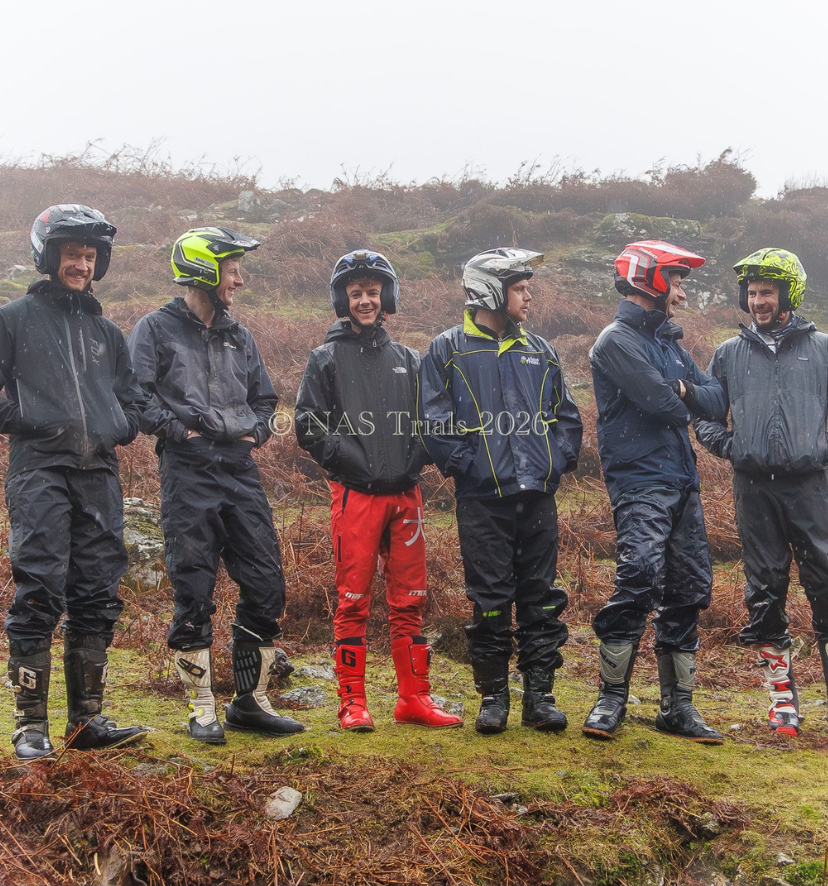
- Waterproofs, this is Yorkshire!
In Your Bag
- Spare spark plug
- Basic spanners and tools
- Tyre pump and low-pressure gauge
- Tape and cable ties
Don't Forget
- Your club membership card
- Your ACU registration
- A drink and some food
- Spare dry clothes
- Something to transport the bike

Step by Step
Your First Trial
Here's what to expect, from signing up to seeing your name on the results.
01
Join & Register
Join a club, such as us, and get your ACU registration for trials. You'll need both cards to sign on.
02
Pick an Event
Check our events page for upcoming club trials. Choose one with an easier route for your first go.
03
Enter
Enter in advance or on the day, depending on the event, and pay the entry fee. Details are in each event listing.
04
Sign On
Show your cards at sign-on, collect your rider number and have your bike checked over before the start.
05
Ride the Sections
Follow the route to each section, ride your lines and let the observer mark your score. Don't be afraid to ask questions.
06
Check Your Results
Results are posted on our website after the trial. Then start planning the next one, because you'll be hooked.
Find Your First Trial
Got a Question?
Common Questions
Can't find what you're looking for? Get in touch and one of the team will help.
Contact Us
Do I need experience to start?
No. Plenty of our riders started with no off-road experience at all. Pick an easier route, take your time, and ask other riders for tips. Trials people love helping newcomers.
Can I come and watch first?
Definitely, and it's a great way to start. Come to one of our trials, watch a few sections and chat to riders in the paddock. You could also try observing, which gives you the best view of how it all works.
Is trials expensive?
Compared with most motorsport, no. There's no race team, no circuit and no expensive consumables. Club membership and entry fees are modest, and good second-hand bikes and kit are easy to find.
Is it safe?
Trials is low-speed and all about control, which makes it one of the safer forms of motorsport. You'll still need the proper kit, and you should always ride within your ability.
How old do I need to be?
Young riders can take part on suitable youth bikes and routes, and there's no upper age limit. Plenty of our riders are still competing well into later life. The ACU sets the rules on youth bike sizes by age.
I put my feet down a lot. Is that OK?
Absolutely. Everyone dabs, especially when they're starting out. Every clean section feels like a win, and you'll be surprised how quickly your scores come down.
Ready to Ride?
Take the Next Step
#1 Membership

#2 Upcoming Events
#3 About RMC